International open access week(s)

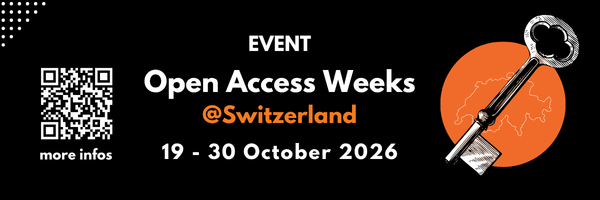
For the third time, the Library will celebrate International Open Access Week with various events and exhibitions set up by our open science Librarians Catherine Brendow and Guillaume Pasquier. In Switzerland, the week will extend into another so that people on family leave can still participate. The theme this year is “The Cost of knowledge”.

Continue reading “International open access week(s)” →

Open access publishing at the Graduate Institute: the 2025 barometer

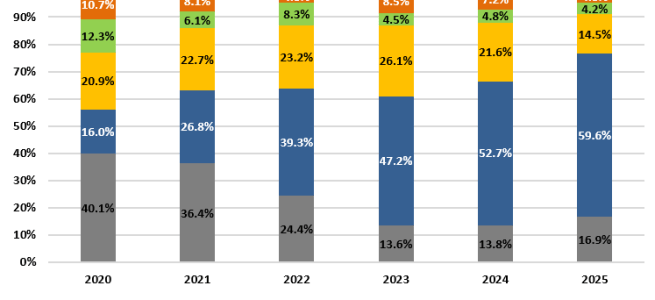
Since 2021, the Graduate Institute has agreements with major publishers that make it easier for researchers to publish open access (OA) articles. They have taken advantage of this opportunity and the proportion of OA articles has risen sharply. But a detailed analysis shows that the path taken may be unsustainable, and that most researchers are still neglecting simple ways to make their research accessible.

Continue reading “Open access publishing at the Graduate Institute: the 2025 barometer” →

SNSF Grantee? Anticipation is key!

Something that makes our colleague Catherine Brendow cringe as an open access publication librarian: researchers contacting her because their SNF-funded article has just been published behind a paywall and asking me “What can I do now?” Unfortunately, we don’t have a magic wand. If you plan ahead (and sometimes opt for an alternative journal), the process will be much smoother.

Continue reading “SNSF Grantee? Anticipation is key!” →

10 advanced ways to become a more proficient Zoteroist

Zotero is now fully integrated into your daily workflow and you’ve mastered all the basic features. Congrats! But did you know that Zotero can do much more than simply act as a citation manager and even become a central hub for your research? It serves as an archive of your work and can help you think, write, collaborate and stay organized. Here are 10 tips to help you become an advanced Zotero user.

Continue reading “10 advanced ways to become a more proficient Zoteroist” →

Why shouldn’t your PhD thesis be accessible to everyone?

A PhD thesis is the result of many years of hard work, and the author generally hopes it will be the start of a successful academic career. But quite often, it is only read by the authors themselves and their supervisors. Who should be allowed to access it, and how? Our colleague Catherine Brendow discusses the main reasons why PhD students are generally reluctant to make their thesis accessible.

Continue reading “Why shouldn’t your PhD thesis be accessible to everyone?” →