Book of the Week: “Inferior: how science got women wrong and the new research that’s rewriting the story” by Angela Saini

What science has gotten so shamefully wrong about women, and the fight, by both female and male scientists, to rewrite what we thought we knew.

In Inferior, acclaimed science writer Angela Saini weaves together a fascinating—and sorely necessary—new science of women. As Saini takes readers on a journey to uncover science’s failure to understand women, she finds that we’re still living with the legacy of an establishment that’s just beginning to recover from centuries of entrenched exclusion and prejudice.

Her book investigates the gender wars in biology, psychology, and anthropology, and delves into cutting-edge scientific studies to uncover a fascinating new portrait of women’s brains, bodies, and role in human evolution.

Publisher: Boston: Beacon Press, [2017]
Call Number: 305.4 HEIA 119372

New on HeinOnline: History of International Law

You can now access the History of International Law database, which Includes hundreds of titles and more than a million pages dating back to 1690 on International Law subjects such as War & Peace, the Nuremberg Trials, Law of the Sea, International Arbitration, Hague Conferences and Conventions and much more!

Continue reading “New on HeinOnline: History of International Law”

Film of the Week: “Isle of dogs” by Wes Anderson

American stop-motion animation in which future Japan sees itself overrun by packs of dogs which are beginning to spread disease to humans.

“A mayor’s solution is to exile every dog to an island filled with toxic waste and rubbish, where they will live out their days away from civilisation. When a young boy is devastated to find his dog is missing, he flies a plane to the island where he enlists the help of its inhabitants to track him down. As the dogs become frustrated with their new home, they formulate a plan to get off the island and back to the mainland.”

Publisher: Twentieth Century Fox Home Entertainment, 2018
Call Number: 2.3 ISL 3

Film de la semaine: “Révolution silencieuse” de Lila Ribi

“Elémenterre”

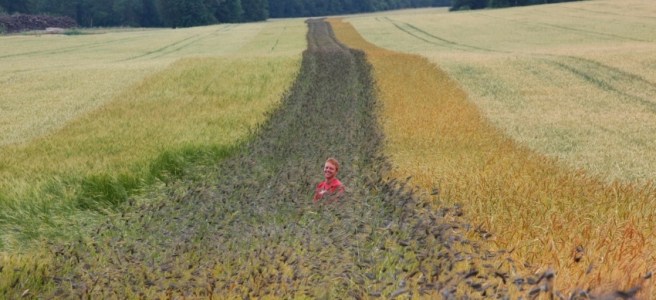
Adepte de la culture biologique, Cédric, paysan suisse, fait le choix d’une production céréalière entièrement locale. Une décision conséquente pour son exploitation et l’entier de sa famille.

Si le bonheur est dans le pré, il exige des sacrifices : oser remettre en question les acquis, affronter un système globalisé vicié et vicieux, quitte à se retrouver en marge. Un risque financier important pour ce père de six enfants et son épouse. Mais une démarche essentielle pour ces esprits zen. De ce retour au plus proche de la terre et du vivant dépend leur équilibre, leur harmonie.

Les documentaires à succès Demain et Solutions locales pour un désordre global prêchaient la bonne parole en laissant de côté les difficultés engendrées. Plus intime, ce film capte avec modestie et sympathie les espoirs, les doutes et les frustrations qu’engendrent ces révolutions silencieuses à hauteur d’homme. Mieux tenu d’un point de vue cinématographique – lumière fuyante, cadre instable, image terne –, il aurait pu  convaincre davantage et emporter.

A découvrir ou revoir en DVD à la Bibliothèque (4.1 REV).


twitter.com/cinefilik
cinefilik.wordpress.com

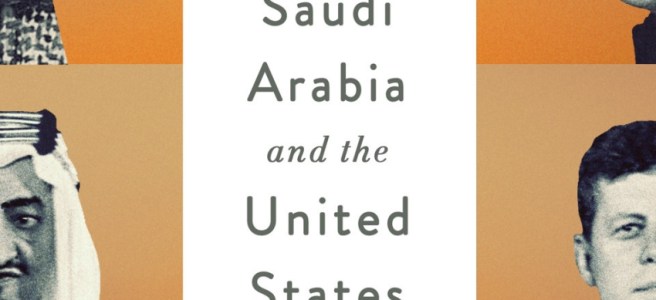
Book of the Week: “Kings and presidents: Saudi Arabia and the United States since FDR” by Bruce Riedel

An insider’s account of the often-fraught U.S.-Saudi relationship.

Saudi Arabia and the United States have been partners since 1943, when President Roosevelt met with two future Saudi monarchs. Subsequent U.S. presidents have had direct relationships with those kings and their successors– setting the tone for a special partnership between an absolute monarchy with a unique Islamic identity and the world’s most powerful democracy. Although based in large part on economic interests, the U.S.-Saudi relationship has rarely been smooth.

Publisher: Washington, D.C.: Brookings Institution Press, 2018
Call Number: 327(532/73) HEIA 121331