You could think of Zotero as a house which you may want to customise to suit your needs. Instead of adding a porch or a swimming pool, this takes the form of plugins that allow you to add features to your reference manager. With the arrival of Zotero 7, which has brought some changes to the plugin landscape, this blog post has been updated.
Continue reading “Home improvement, the Zotero way”Author: Catherine Brendow
10 advanced ways to become a more proficient Zoteroist
Zotero 7 is here, bringing with it many improvements, but some Zotero users may feel a bit alienated, as the Zotfile and Zutilo plugins that have become an integral part of their workflows will likely never be compatible with this new version. A good opportunity to update this blog post and introduce new plugins that will easily fill the gap. So here are 10 new tips to help you become an advanced Zotero user.
Continue reading “10 advanced ways to become a more proficient Zoteroist”Taming academic writing
November is Academic Writing Month! Writing theses, articles or books is a key skill for graduate students and researchers, and it is not an easy one to master. To help students master it, the Graduate Institute Library offers a wide choice of print and e-books on this topic. These resources are often updated and presented in a dedicated libguide, as well as a temporary display in the entrance of the Library.
Continue reading “Taming academic writing”Self-plagiarism: Why reusing your own work isn’t harmless
You probably all know what plagiarism is: using someone else’s work without giving them proper credit. It is a form of theft, a serious breach of academic ethics, and is heavily sanctioned, for students and for researchers alike. But what is the meaning the word “self-plagiarism”? You cannot steal from yourself! Our colleague Catherine Brendow explains.
Continue reading “Self-plagiarism: Why reusing your own work isn’t harmless”Open access report 2023: Geneva Graduate Institute research is more open than ever before
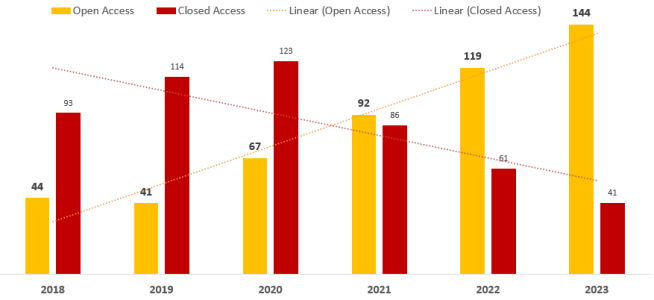
78% of the journal articles published by our researchers in 2023 were open-access, compared to 66% in 2022, 52% in 2021, and 35% in 2020. This progress is driven by our Read and Publish agreements with major publishers, the OA mandates of many funders, and the conviction of most researchers that open-access publishing is good for them. But is this “gold route” sustainable in the long term?
Continue reading “Open access report 2023: Geneva Graduate Institute research is more open than ever before”