Livre de la semaine : “Demain la Chine : démocratie ou dictature ?” de Jean-Pierre Cabestan

Une thèse communément admise voudrait que le développement économique spectaculaire de la Chine et l’expansion d’une classe moyenne qu’il entraîne favorisent tôt ou tard une libéralisation de son régime politique et une évolution plus ou moins douce vers la démocratie. Est-ce si sûr ?

Jean-Pierre Cabestan montre la fragilité de cette thèse en regard du fonctionnement réel du système politique chinois et de ses rapports avec la société. Il expose les raisons qui rendent beaucoup plus probable le maintien d’un régime autoritaire et modernisateur dirigé sans partage par le Parti communiste, la principale étant le large consensus des élites autour de ce projet.

Editeur : Paris : Gallimard
Cote : 321.7(51) HEIA 122732


Jean-Pierre Cabestan sera présent à l’Institut, le mercredi 31 octobre, pour une conférence intitulée “China’s Future: Democracy or Dictatorship, Rule of Law or Rule by Law?”
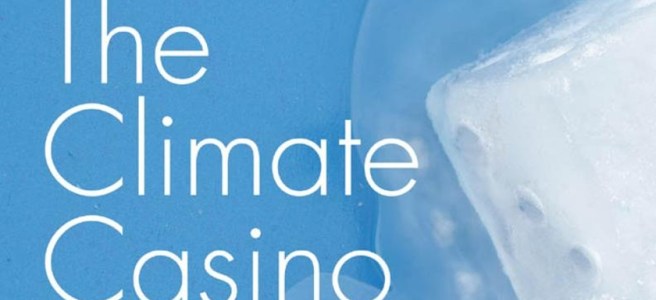

Book of the Week: “The climate casino: risk, uncertainty, and economics for a warming world” by William Nordhaus

The 2018 Nobel laureate for economics analyses the politics and economics of the central environmental issue of today and points the way to real solutions.

Climate change is profoundly altering our world in ways that pose major risks to human societies and natural systems. We have entered the Climate Casino and are rolling the global-warming dice, warns economist William Nordhaus. But there is still time to turn around and walk back out of the casino, and in this essential book the author explains how.

Publisher: New Haven: Yale University Press, 2013
Call Number: 577.22 HEIA 96481

Book of the Week: “Capitalism: a conversation in critical theory” by Nancy Fraser and Rahel Jaeggi

In this important new book, Nancy Fraser and Rahel Jaeggi take a fresh look at the big questions surrounding the peculiar social form known as “capitalism”, upending many of our commonly held assumptions about what capitalism is and how to subject it to critique.

They show how, throughout its history, various regimes of capitalism have relied on a series of institutional separations between economy and polity, production and social reproduction, and human and non-human nature, periodically readjusting the boundaries between these domains in response to crises and upheavals. They consider how these “boundary struggles” offer a key to understanding capitalism’s contradictions and the multiple forms of conflict to which it gives rise.

Publisher: London : Polity, 2018
Call Number: 330.122 HEIA 122232


Nancy Fraser will be present at the Institute, on Thursday, 11 October, for a public lecture on democracy’s crisis and the political contradictions of financialised capitalism.

Book of the Week: “Sex and secularism” by Joan Wallach Scott

Joan Wallach Scott’s acclaimed and controversial writings have been foundational for the field of gender history.

“Challenging the assertion that secularism has always been synonymous with equality between the sexes, Sex and Secularism reveals how this idea has been used to justify claims of white, Western, and Christian racial and religious superiority and has served to distract our attention from a persistent set of difficulties related to gender difference―ones shared by Western and non-Western cultures alike.”

Publisher: Princeton University Press, 2018
Call Number: 305.3 HEIA 120474


Joan Wallach Scott will be present at the Institute, on Tuesday, 25 September, for the Opening lecture of the academic year, “Gender equality: why is it so difficult to achieve?”

Book of the Week: “What we owe: truths, myths, and lies about public debt” by Carlo Cottarelli

The euro crisis, Japan’s sluggish economy, and partisan disagreements in the United States about the role of government all have at least one thing in common: worries about high levels of public debt.

“Nearly everyone agrees that public debt in many advanced economies is too high to be sustainable and must be addressed. There is little agreement, however, about when and how that addressing should be done – or even, in many cases, just how serious the debt problem is.

As the former director of the International Monetary Fund’s Fiscal Affairs Department, Carlo Cottarelli has helped countries across the globe confront their public finance woes. He also had direct experience in advising his own country, Italy, about its chronic fiscal ailments. In this straightforward, plain-language book, Cottarelli explains how and why excessive public debt can harm economic growth and can lead to crises such as those experienced recently in Italy and several other European countries.”

Publisher: Washington, D.C. : Brookings Institution Press, 2017
Call Number: 336.3 HEIA 120154