E-book of the Week: “Succeeding with your Master’s Dissertation: A Step-by-step Handbook”, 3rd ed. by John J. Biggam

“This book provides in-depth guidance on how to complete your dissertation, thus meeting the needs of students eager for practical assistance in this common place, but challenging, mode of assessment.”

https://ebookcentral.proquest.com/lib/graduateinstitute/detail.action?docID=1920721

Publisher: McGraw-Hill Education, 2014

E-book of the Week: “The World Health Organization: A History”, by Marcos Cueto, Theodore M. Brown and Elizabeth Fee

“According to its Constitution, the mission of the World Health Organization (WHO) was nothing less than the ‘attainment by all peoples of the highest possible level of health’ without distinction of race, religion, political belief, economic status, or social condition.

But how consistently and how well has the WHO pursued this mission since 1946? This comprehensive and engaging new history explores these questions by looking at its origins and its institutional antecedents, while also considering its contemporary and future roles. It examines how the WHO was shaped by the particular environments of the postwar period and the Cold War, the relative influence of the US and other approaches to healthcare, and its place alongside sometimes competing international bodies such as UNICEF, the World Bank, and the Gates Foundation.

The authors re-evaluate the relative success and failure of critical WHO campaigns, from early malaria and smallpox eradication programs to struggles with Ebola today.”

Publisher: Cambridge University Press, 2019
https://www.cambridge.org/core/books/world-health-organization

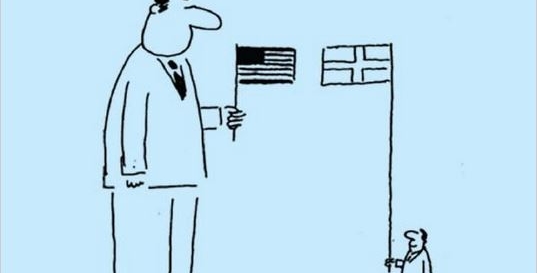
Book of the Week: “Too small to fail: why some small nations outperform larger ones and how they are reshaping the world”, by R. James Breiding

“Too Small to Fail analyzes how several successful ‘small’ countries, with populations under twenty million, have made a virtue out of their physical limitations. The book seeks to understand what it is they do differently, and why. What is their recipe for achieving better-educated, more egalitarian and wealthier populations? The book looks first at the forest and then the trees. It examines the characteristics shared by small countries, such as Switzerland, Ireland, Singapore, and the Scandinavian states. It draws parallels and discovers patterns shared among them that are common to each of their success stories. The book then looks at the policies of selected countries that have paved the way for remarkable improvements; and considers the individuals, corporations and institutions that have made a positive and sustainable impact. It further goes on to explain how these small countries are reshaping the World in a never before manner.”

Publisher: Harper Business, Uttar Pradesh (India), 2019
Call number: 303 HEIA 126707


Illustration: book cover.

Book of the Week: “Transforming multilateral diplomacy: the inside story of the Sustainable Development Goals”, by Macharia Kamau, Pamela Chasek and David O’Connor

Transforming Multilateral Diplomacy provides the inside view of the negotiations that produced the UN Sustainable Development Goals (SDGs). Not only did this process mark a sea change in how the UN conducts multilateral diplomacy, it changed the way the UN does its business. This book tells the story of the people, issues, negotiations, and paradigm shifts that unfolded through the Open Working Group (OWG) on SDGs and the subsequent negotiations on the 2030 Sustainable Development Agenda, from the unique point of view of Ambassador Macharia Kamau, and other key participants from governments, the UN Secretariat, and civil society.”

Publisher: London, Routledge, 2018
Call number: 327(004) HEIA 121548

Book of the Week: “Pandemic: tracking contagion, from cholera to Ebola and beyond”, by Sonia Shah

“A wide-ranging inquiry into the origins of pandemics. Interweaving history, original reportage, and personal narrative, Pandemic explores the origins of epidemics, drawing parallels between the story of cholera-one of history’s most disruptive and deadly pathogens-and the new pathogens that stalk humankind today, from Ebola and avian influenza to drug-resistant superbugs. More than three hundred infectious diseases have emerged or reemerged in new territory during the past fifty years, and 90 percent of epidemiologists expect that one of them will cause a disruptive, deadly pandemic sometime in the next two generations. To reveal how that might happen, Sonia Shah tracks each stage of cholera’s dramatic journey from harmless microbe to world-changing pandemic, from its 1817 emergence in the South Asian hinterlands to its rapid dispersal across the nineteenth-century world and its latest beachhead in Haiti. She reports on the pathogens following in cholera’s footsteps, from the MRSA bacterium that besieges her own family to the never-before-seen killers emerging from China’s wet markets, the surgical wards of New Delhi, the slums of Port-au-Prince, and the suburban backyards of the East Coast. By delving into the convoluted science, strange politics, and checkered history of one of the world’s deadliest diseases, Pandemic reveals what the next epidemic might look like-and what we can do to prevent it.”

Publisher: New York, Farrar, Straus and Giroux, 2016
Call number: 614 HEIA 114963