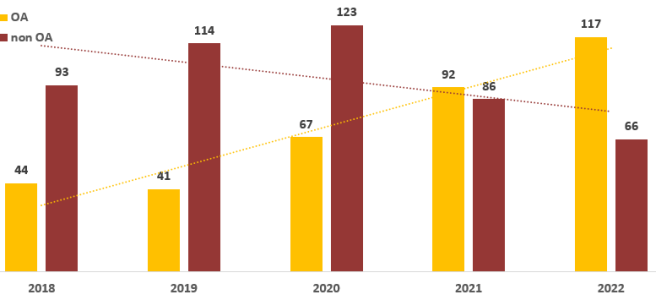
Since 2021, Geneva Graduate Institute researchers can fulfill their OA mandates easily and make their research more accessible through Read and Publish agreements with 6 large publishers. Most of them have jumped at the opportunity, and our research is now more open than ever before.
Continue reading “Open access and IHEID research: The 2022 harvest”Category: Information Literacy
Google Scholar: Let’s be scholarly
Google Scholar is the go-to search engine for anyone looking for scholarly content. It offers the same convenient and familiar interface as Google, as well as options that can be useful to researchers. Here is how to use it properly.
Continue reading “Google Scholar: Let’s be scholarly”How to migrate from Twitter to Mastodon
Twitter is an important social networking tool for academics. As its future is unclear, some may want to migrate to a different social network offering familiar features and populated with other academics. Mastodon is an open-source alternative currently growing at a rapid pace that you may want to explore.
Continue reading “How to migrate from Twitter to Mastodon”Plagiarism – the capital sin in academia?
Second-year master’s students are now toiling over their theses, which is hard enough in this beautiful weather. Some of them may also be burdened by a nagging doubt: what if I were suspected of plagiarism? Plagiarism can have severe consequences for the culprit and even ruin political careers years later. Here is what you should know about plagiarism and how to avoid it.
Continue reading “Plagiarism – the capital sin in academia?”From reading to citing: the new Zotero workflow
Big news for Zotero addicts! Version 6 was released along with an iOS app for iPhones and iPads. They should make your writing workflow smoother, from PDF management to notes and citations. Join us on a guided tour of the new options and a reminder of how notes can play a central role in your workflow.
Continue reading “From reading to citing: the new Zotero workflow”