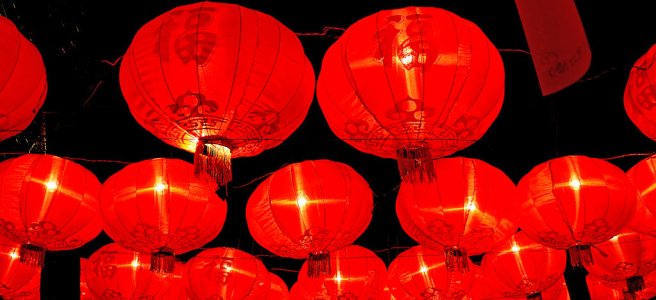
Lunar New Year, also called Spring Festival or Chinese New Year, is an important festival celebrated in East- and SouthEast-Asian countries such as China, Vietnam, or Korea. As its name says, this holiday celebrates the beginning of spring and the arrival of a new zodiac cycle based on the lunar calendar (National Museum of Asian Art, 2025?).
This festival begins with the first new moon of the lunar calendar and ends with the Lantern Festival on the first full moon of the same calendar, 15 days later. The festival starts between January 21th and February 20th depending on the year as the lunar calendar is not regular (National Geographic Society, 2024). Each year is associated with an animal from the zodiac. This year, it will be the year of the snake according to the Chinese zodiac (Li, 2024).
The snake, symbolizing wisdom and transformation, offers opportunities for personal growth and change [1].

What are its origins?
The origins of the Lunar New Year festival lie in legends of a thousand years. One of these is the legend of Nian. As per it, Nian was an horrible beast living in the depths of the sea. Every Lunar New Year’s Eve, Nian would come out of the sea and destroy the villages in search for human flesh. But one year, the villagers found out that Nian was afraid of the color red, loud noises and fire. In order to protect themselves, they hung red decorations, they burned lanterns all night and lit firecrackers to scare Nian away. It worked, Nian was frightened and driven away (Li, 2024).
This story explains two important traditions—hanging red decorations and lighting firecrackers—representing victory over evil and a fresh start to the year. [2]
What happens during the festival?
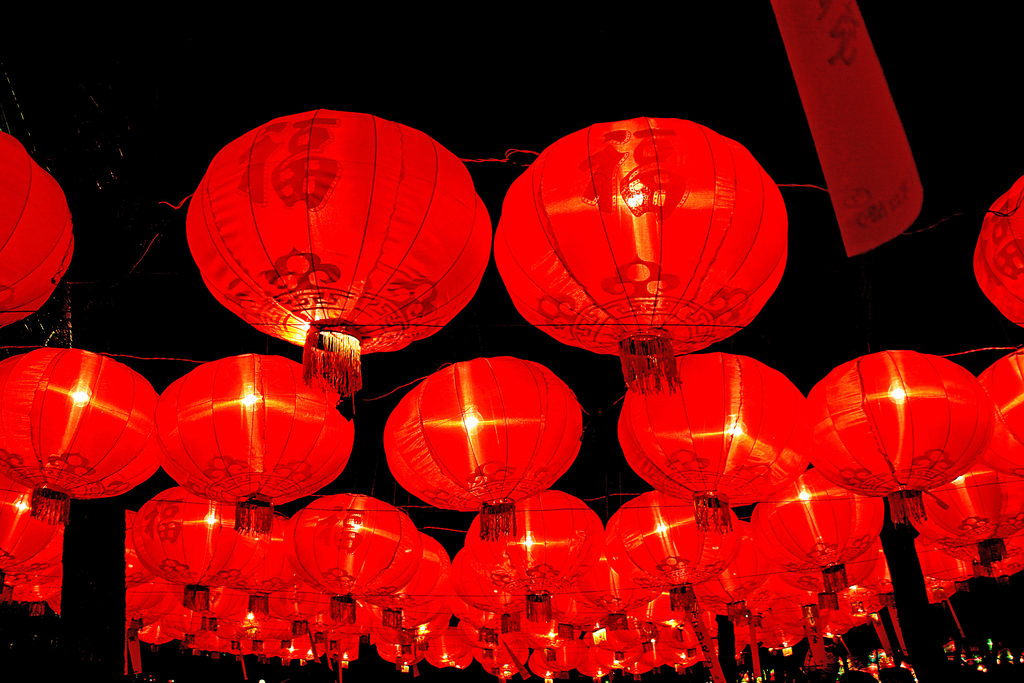
Approximately 10 days before New Lunar Year begins, people use to clean houses from bottom to top. This action is believed to take away all the previous bad luck and to welcome all the good luck which is hoped to be happening in the coming year. This custom is called “sweeping of the grounds”. Then, according to tradition people decorate their houses with red things: for example, they hang red paper cuttings on the windows and red lanterns, they paint their doors in red, etc. (Britannica, 2025). They also write good luck wishes and adorn their doors with them (National Museum of Asian Art, 2025?).
Even if Lunar New Year celebrations don’t follow a preset program, there are some days during which specific rituals or festivities are held. For example, on New Year’s Eve, families are gathered for a “reunion dinner” made of symbolic dishes such as wholes fishes representing abundance. This should bring good luck and fortune. (National Museum of Asian Art, 2025?). People usually don’t finish their meals to accentuate this symbolic. On New Year’s Day, unmarried adults and children receive red envelopes (lai see (cantonese) / hong bao (mandarin)) containing small amounts of money. The third day of the festivities is usually reserved for honoring deceased relatives by visiting graves or lighting incense or paper offerings in memory of loved ones (National Geographic Society, 2024).
Dances (including the famous lion dances) and fireworks are usual throughout this festival, and crown the Lantern Festival which is the celebration happening on the last day of Lunar New Year. On this night, traditional food such as yuanxiao (sticky rice balls that symbolize family unity), fagao (prosperity cake), and yusheng (raw fish and vegetable salad) are served. Finally, children carry colorful lanterns around the neighborhood at night to mark the end of the celebration (National Museum of Asian Art, 2025?).
In our library
As mentioned earlier, this event is celebrated mainly in China but also in various other East Asian countries. You will find interesting books about customs and about these countries under the following call numbers:
- 390 Customs. Folklore
- 394.26 Holidays
- 950 Asia. East Asia; Asia-Pacific
- 951* China
- 951.9* Korea
- 959.7 Vietnam
You should also check under geographic subdivisions such as:
- …(5) Asia. East-Asia; Asia-Pacific
- …(51) China
- …(519) Korea
- …(597) Vietnam
Geographic subdivisions are added to call numbers on our shelves to specify the geographic area of a subject. For example, 390(5) stands for Customs in Asia, and 327(51/73) stands for the international relations between China and the United States.
Citations
[1] LI, Chengxin, 2024. Lunar New Year 2025: a Guide to the Year of the Snake. Chinese New Year 2025: Year of the Snake [en ligne]. 30 septembre 2024. Disponible à l’adresse : https://chinesenewyear.net/lunar-new-year-2025-guide-year-of-the-snake/ [consulté le 10 janvier 2025].
[2] Ibid.
Sources
BRITANNICA, T. Editors of Encyclopaedia, 2025. Lunar New Year. Britannica. [en ligne]. 9 janvier 2025. Disponible à l’adresse : https://www.britannica.com/topic/Lunar-New-Year [consulté le 10 janvier 2025].
LI, Chengxin, 2024. Lunar New Year 2025: a Guide to the Year of the Snake. Chinese New Year 2025: Year of the Snake [en ligne]. 30 septembre 2024. Disponible à l’adresse : https://chinesenewyear.net/lunar-new-year-2025-guide-year-of-the-snake/ [consulté le 10 janvier 2025].
NATIONAL GEOGRAPHIC SOCIETY, 2024. Lunar New Year. National Geographic Society. [en ligne]. 30 octobre 2024. Disponible à l’adresse : https://education.nationalgeographic.org/resource/lunar-new-year/ [consulté le 10 janvier 2025].
NATIONAL MUSEUM OF ASIAN ART, [2025?]. Lunar New Year. Curiosity Welcomed. Disponible à l’adresse : https://asia.si.edu/whats-on/events/celebrations/lunar-new-year-celebration/ [consulté le 10 janvier 2025].
 Geneva Graduate Institute Library Blog